
V5 → V6
Clearer recovery paths
Typing states, drawer support and in-context grammar improved lesson progression before Suggestion addressed pronunciation failure.
02 of 06 · Core product
I developed the core AI conversation model, then iterated using observed frustration, funnel behaviour and product versions until Suggestion helped learners recover from pronunciation failure.
At a glance
01 Challenge
Conversation was the core of the Kaizen experience, but a conventional messaging interface would not provide enough support for someone learning a new language.
Before defining the interaction model, I reviewed messaging and language-learning products to understand established behaviours, including message hierarchy, audio controls, conversation pacing and how supporting information was presented. Competitors provided useful interface patterns, but none were solving the same problem: creating a conversation that felt natural while also functioning as a structured AI-powered lesson.
02 Interaction model
Rather than treating each control as a separate feature, I organised the lesson around what learners needed at each moment — from understanding the AI's state to recovering when confidence broke down.
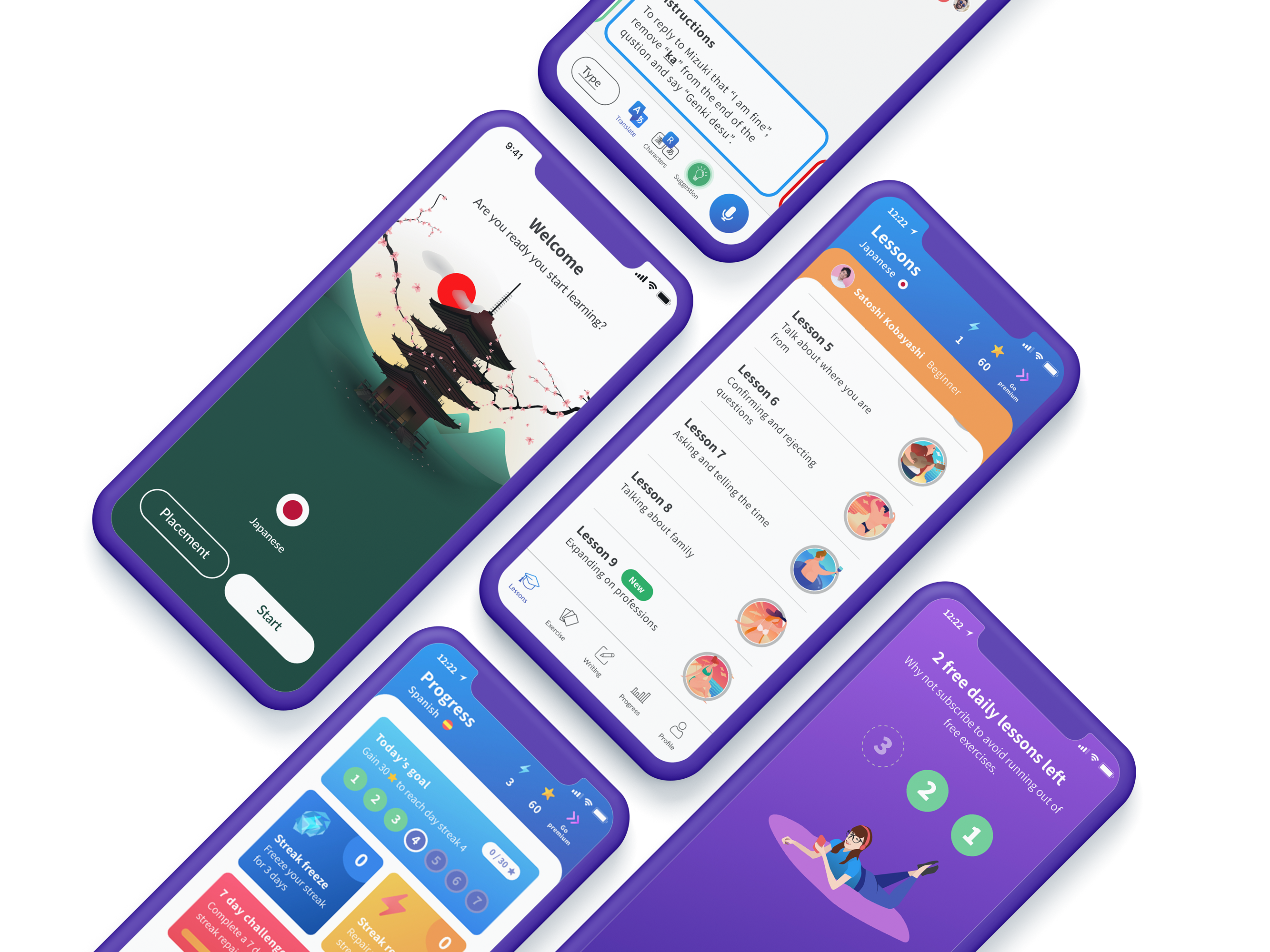
AI responding
Clear composing and speaking states so the lesson feels active.
Audio playback
Animated feedback when the tutor speaks.
Reduced-speed pronunciation
Normal and slowed playback when a phrase is unclear.
Translation
English support revealed on demand, not shown by default.
Character switching
Romaji and hiragana so reading difficulty could adapt.
In-context grammar
Drawer cards and prompts without leaving the conversation.
Errors and retries
Clear error states with retry actions.
Suggestion
Contextual pronunciation support after repeated failure — the key recovery decision.
03 Evidence
Through guerrilla testing and recorded sessions, I found a recurring issue: users often believed they were saying the right word, but still received errors. After repeated failed attempts, frustration increased and lesson drop-off rose sharply. Correction alone was not enough support.
Users needed help recovering from mistakes, not just being told they were wrong.
Mizuki lessons · iOS · Last 7 days
72.0%
Average lesson completion
Key drop-off finding
Most learners sent messages successfully, but completion varied —mizuki_1 dropped to 59.16% overall, signalling friction after repeated failure rather than at lesson entry.
Lesson progression funnel
04 Iterations
| Version | What failed | What changed | What evidence showed |
|---|---|---|---|
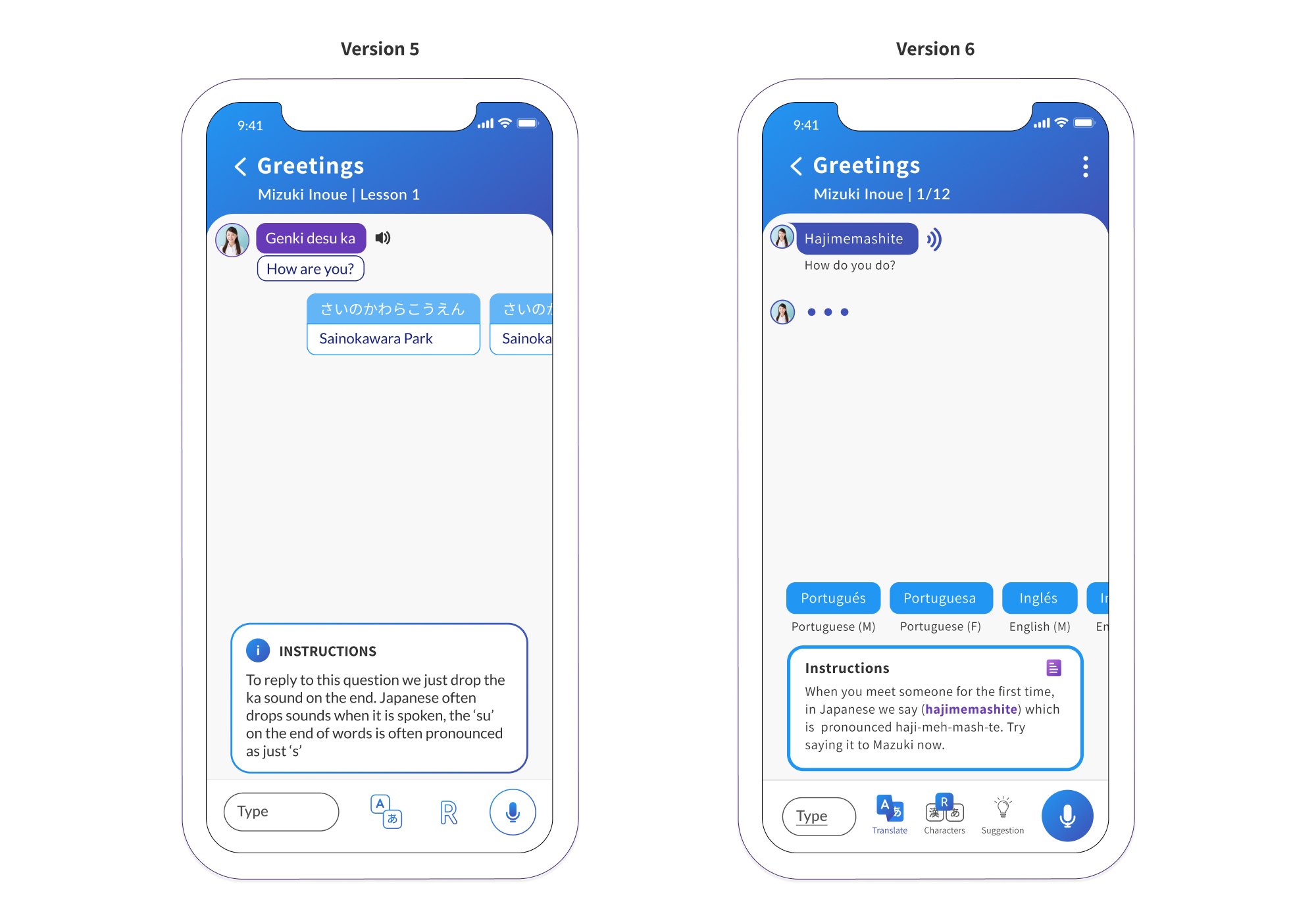
| Version 5 | Limited interaction states and weak recovery when learners became stuck. | Baseline conversation model with differentiated messages and core controls. | Funnels showed drop-off after repeated pronunciation failure. |
| Version 6 | Learners needed clearer feedback and support without leaving the lesson. | Typing states, drawer support, grammar prompts and clearer options. | Testing showed improved responsiveness; pronunciation recovery remained unresolved. |
| Later versions | Supporting content sat too far from the instruction. | Controls moved closer to instructions; grammar accessible in context. | Mixpanel compared version progression from entry to completion. |
05 Suggestion
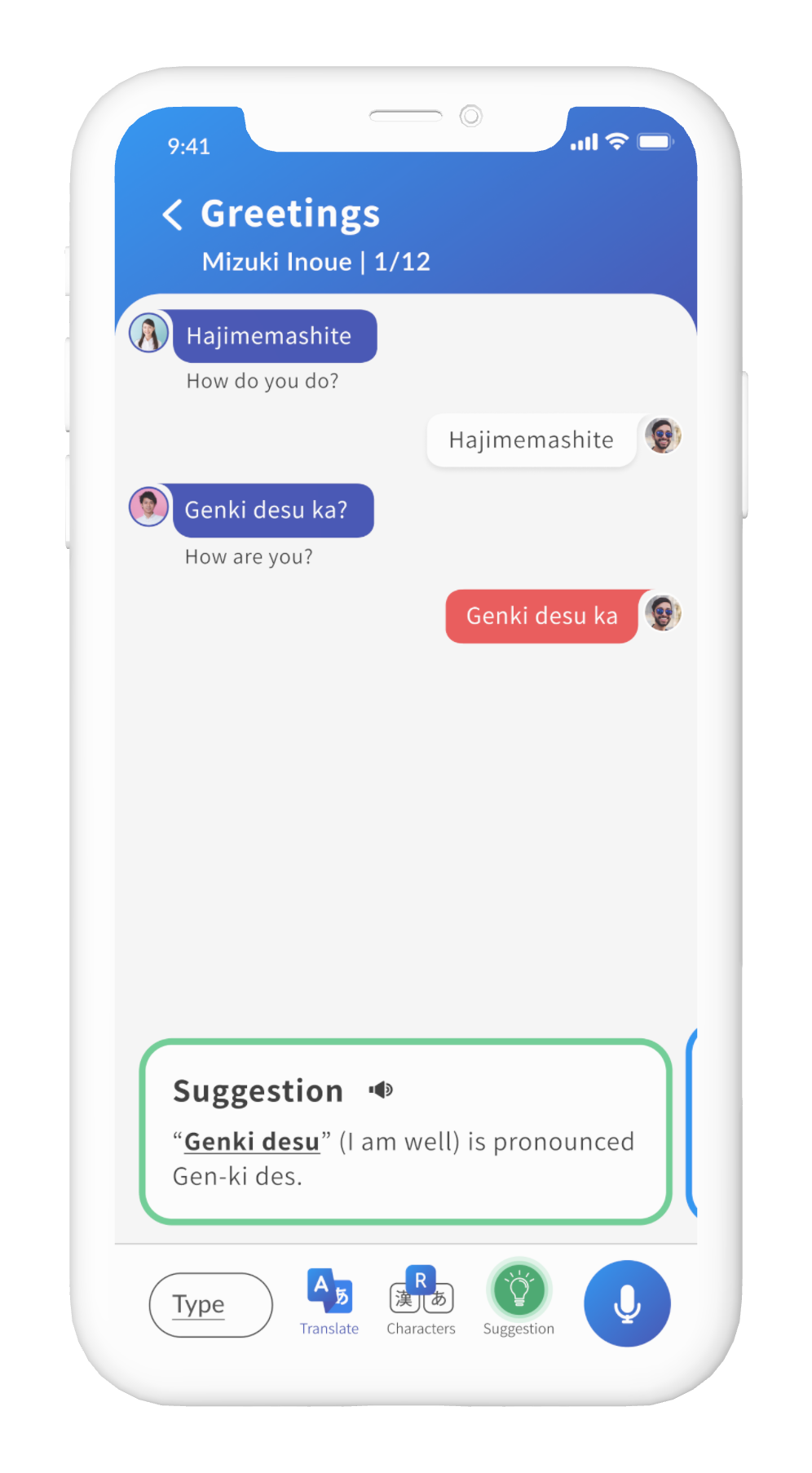
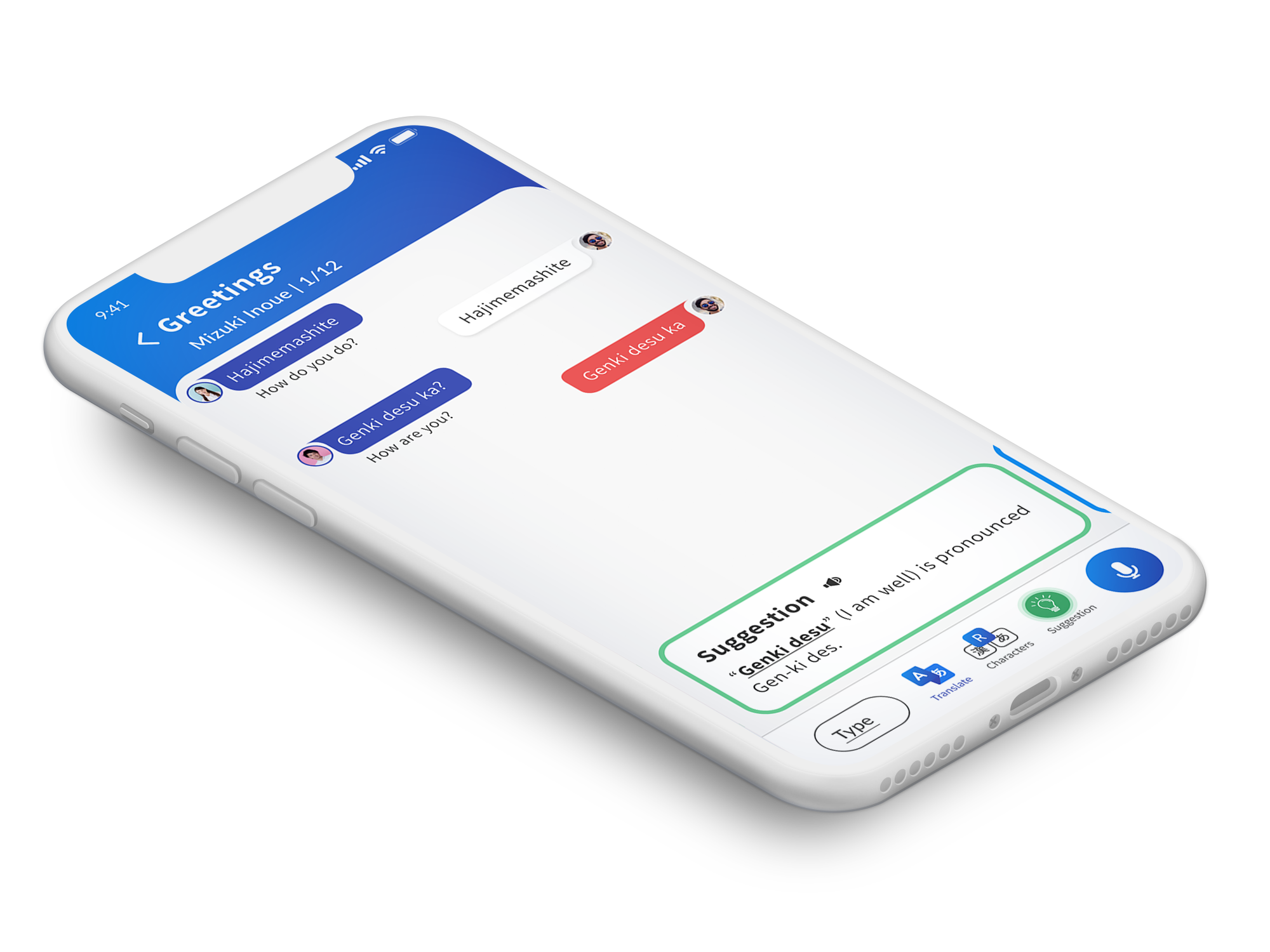
To reduce frustration, I introduced Suggestion, a support card that broke pronunciation into simpler syllables and allowed users to hear the word more slowly. The goal was to preserve challenge while giving users a way through moments of failure. The design was triggered after repeated errors, directly inside the lesson flow.
Testing revealed repeated pronunciation failure. Correction alone was not enough. Suggestion broke pronunciation into manageable support while keeping the learner inside the lesson — increasing lesson completion by 25%.
06 Delivery
I designed the individual message states, audio behaviours, errors and character-set variations, then documented how each component should respond throughout the conversation.
I also created an interactive prototype to communicate timing, audio feedback, animation and transitions to the engineering team—details that could not be understood fully from static screens alone.
V5 → V6
Typing states, drawer support and in-context grammar improved lesson progression before Suggestion addressed pronunciation failure.
Measured
Mixpanel funnels compared lesson versions so design changes could be assessed against real completion behaviour.
Foundation
The conversation model informed later areas including practice and retention mechanics. See retention case study.
07 Results and learning
Suggestion worked because it distinguished between failure and recoverable difficulty. The lesson remained challenging, but learners had a clearer route forward when confidence began to break down.
The conversation model became the interaction foundation for later product areas, with measurable improvement tied specifically to in-lesson recovery.
Improving error recovery helped learners progress through conversation lessons, but research revealed a more foundational barrier: many beginners lacked confidence with Japanese writing.
Continue to Japanese writing system